The Epistemic Crisis Behind the AI Crazy
Why it's here
A brilliant post by Nils Gilman on a topic I’ve been thinking about nonstop for a while. I was planning to write my own take on it, happened to check his Substack, and found he’d already written about it. I still have a take, though.
Gilman’s most important point is that we’ve lost any collective way of deciding which claims about the future are reasonable and which are downright nonsense. Elon Musk says AI will bring 100% annual growth. Anthropic’s “reasonable middle” is 15%. Geoffrey Hinton, the godfather of AI, warns of annihilation. P(doom) and p(boom) sit side by side, and neither is laughed out of the room. Without a shared sense of what future we should imagine, it feels like every future is coming at us like a freight train, all at once. And the result is paralysis. We go through the motions out of inertia or momentum, or because everyone else is doing the same, and we can’t exactly stop living.
I think that paralysis point is underrated, and it ties into my own take. Whenever I talk to colleagues and friends about AI, the two most common reactions are ignorance and anxiety. Mine is anxiety, and explaining why might be instructive.
I use these tools day in, day out, and I’ve fully embraced them, not as an AI booster but because I see immense utility in them. I wouldn’t call it AI psychosis; what I have is AI delirium. For a long time, I had a never-ending list of things I wanted to do, all constrained by the fact that I couldn’t code. Now there’s this magical genie that can grant any software-shaped wish, and futures that were unimaginable or unavailable to me are suddenly possible.
And that’s exactly where the anxiety comes from. I can do pretty much whatever I want, and with each thing I build, my ambition grows, which tells you how powerful these tools are. So if they’re already better than me in so many domains, what chance do I stand in the job market? More often than not, my answer is: not a whole lot. Maybe that’s a sad admission that I’m useless, or maybe I’m failing to see what people who understand technological progress see, which is that more jobs always get created than destroyed. Yes, I get it. But in this moment, how can I not be anxious?
Then there’s the other end of the spectrum: ignorance. No matter how you look at it, it’s very early. It’s been nearly four years since these tools entered our lives, and we don’t have great data on how far they’ve spread. The best available numbers, from Microsoft (opens in a new tab), suggest about one in five working-age people worldwide use them, closer to three in ten in richer countries. From what I can see, most people are either unaware of these tools or use them a couple of times a week for generic stuff, like questions they’d otherwise have asked Google.
So where does the anxiety come from? To my mind, two places. Either you use these tools, see how capable they are and despair that it’s over for you, or you simply can’t escape the commentary. It’s everywhere: in the newspaper, on your phone, on Instagram, in reels, videos, podcasts, tweets and posts. It’s impossible not to run into grandiose, outlandish and depressing proclamations from the very people building these things. How can you not pay attention, and believe some of it, if not all of it? As Gilman points out, we have no shared way of pushing back on these claims, and the wildest ones get rewarded. Add to that how divided we are, and we’ve all but surrendered our ability, and our responsibility, to imagine the future to the people building what they believe will be the last invention humanity ever needs to make.
That anxiety is one of the most underappreciated aspects of this moment. It’s a psychological tax we haven’t paid nearly enough attention to, and I think it’s a tax on productivity too. Vast swaths of white-collar workers seem outright paralyzed by what these things can do. In the middle of a profound disruption, it’s always hard to imagine a better future. So these people are dealing with an anxiety that most of us were never trained to handle, while still having to show up at the office, because everyone has responsibilities and food to put on the table. This anxiety tax is debilitating and barely discussed.
For a long time, most people had more or less the same script for life. You finish your education, get a good job or start something, and based on how well you do, you plan your future: a marriage, a house, a retirement. AI has delivered such a profound shock to that script that when I talk to people, I get the feeling that, for them, the future has ended. It’s been foreclosed. They’re stuck in the immediate present, looking ahead and seeing nothing, while still carrying this crushing burden, without the tools to deal with it.
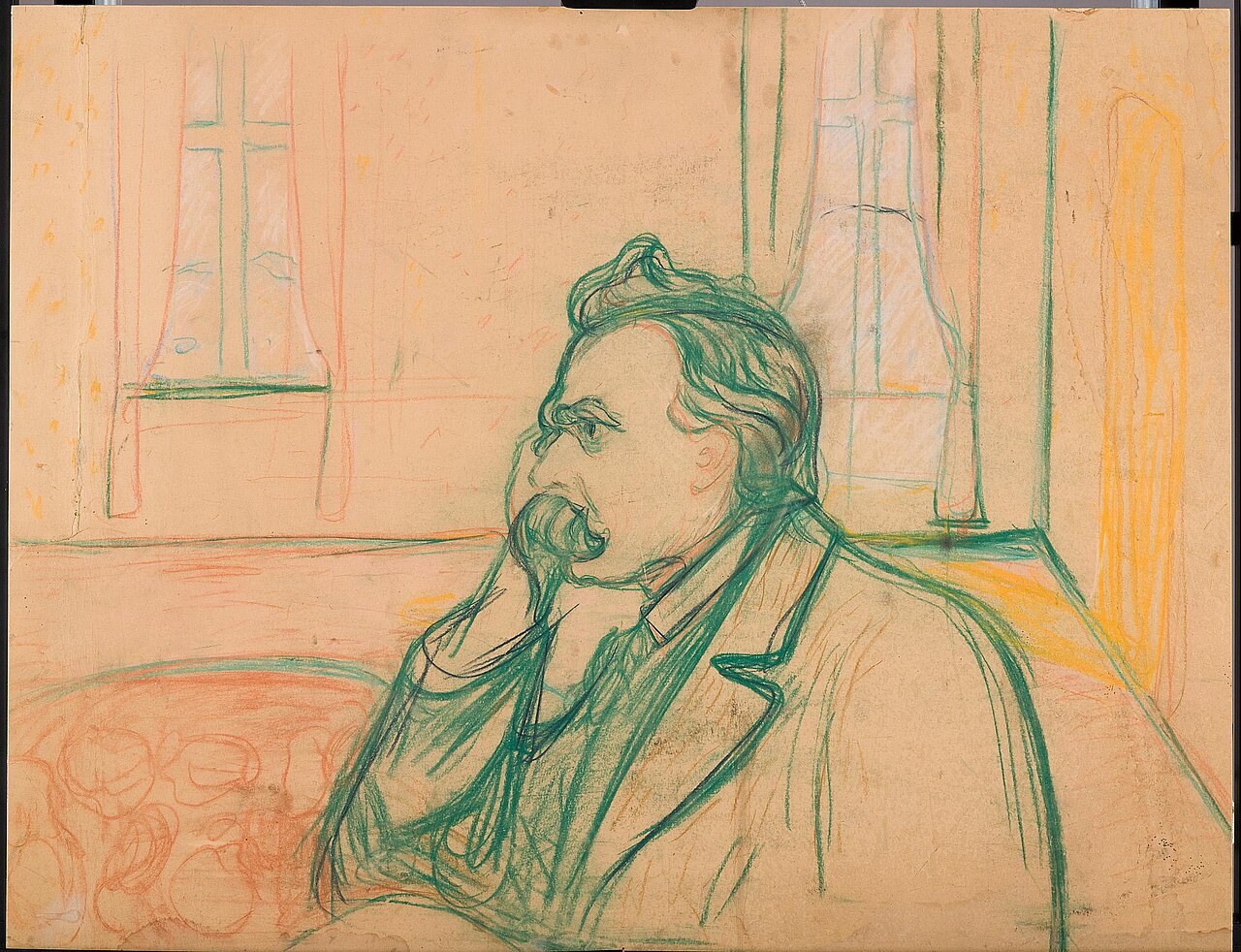
Gilman closes his post with Nietzsche’s madman, and I can’t think of a better description of how it feels:
How could we drink up the sea? Who gave us the sponge to wipe away the entire horizon?
B.
From the piece
And that disorder, in turn, is producing a political and policy debate characterized by precisely the things that define psychological disturbance: emotional dysregulation and breakdowns in mental functioning that are causing severe distress and daily impairment. How can you stay sane when, every day, the newspapers, your social feed, the chatter on the street, and everything else around you are offering wildly divergent claims about the future? How can you plan anything?
Under either the p(doom) or the p(boom) scenario, is there any reason at all to get an education, let alone contribute to your SEP-IRA? The inability to adjudicate between wildly divergent claims about the future—the absence of any social consensus about how to establish warrant for claims about what is to come—is literally paralyzing people’s ability to act. At best, people continue to act out of inertia, momentum, or simple conformity: just doing things because that is what everyone else is doing.
This is what I mean when I say that the state of the discourse is “disordered” in a clinical sense. The present AI discourse is, in this sense, literally insane.
To put it in more colloquial and old-fashioned terms, the loss of a shared horizon of the future is producing a kind of collective nervous breakdown. That’s not a term used in contemporary psychology, but it seems as apt a label as any for the present state of the discourse.